Local food guide · Updated August 2026
What to eat in Barcelona: the local food guide
Start with pa amb tomàquet, try a bomba from Barceloneta, share a proper rice dish and save room for Crema Catalana. These are the 12 foods and drinks that give you an honest taste of Barcelona.
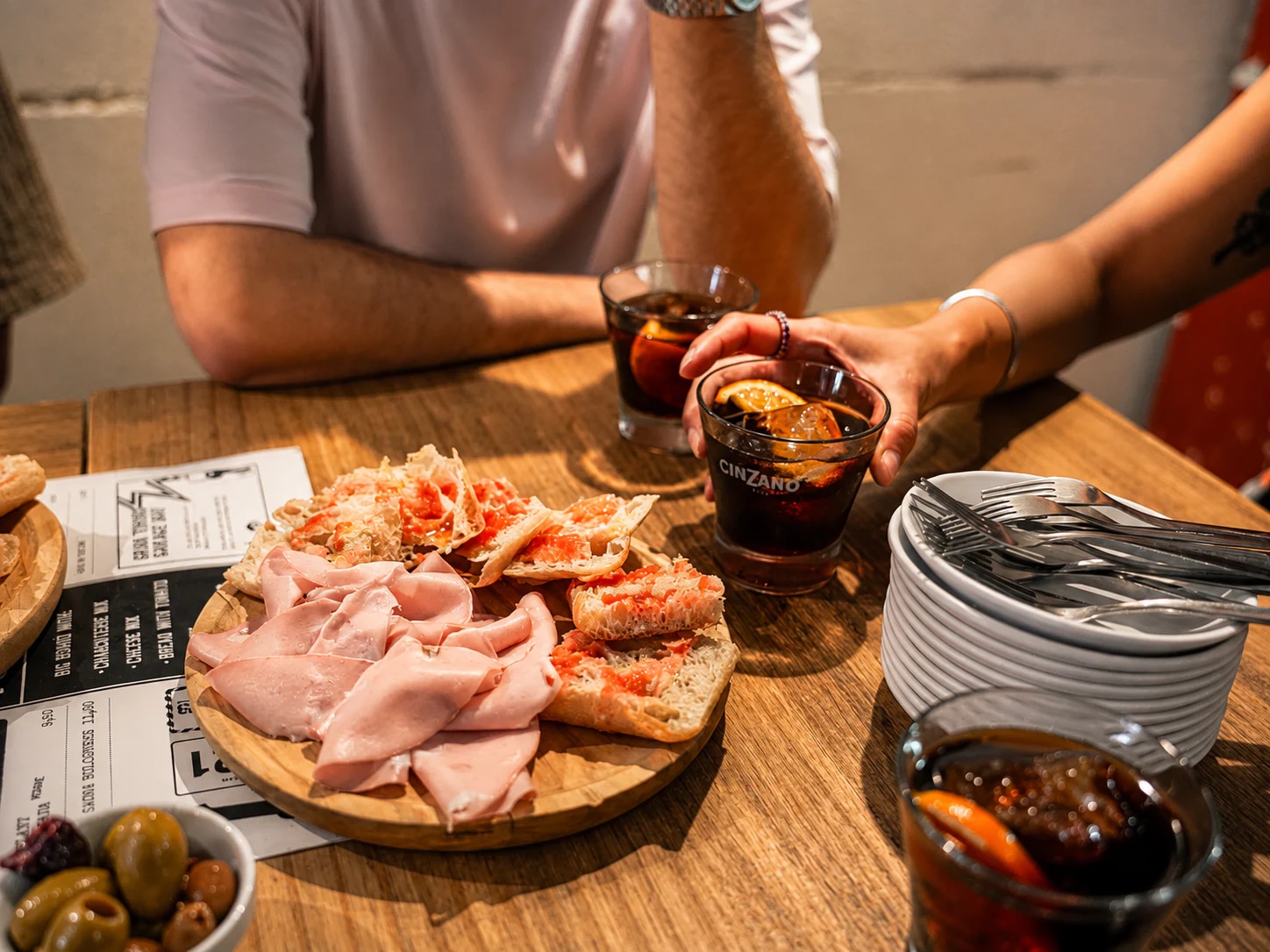 Pa amb tomàquet, charcuterie and vermouth
The short answer
What should you eat first?
If you only have one day, order pa amb tomàquet with cured meats, patatas bravas, a Barceloneta bomba, one seasonal seafood dish and Crema Catalana. If you have time for a slower lunch, add a rice dish or fideuà. That mix covers everyday tapas, Catalan identity and Barcelona’s Mediterranean side without pretending every famous Spanish dish began here.
Save this shortlist
Barcelona food at a glance
Most Catalan
Pa amb tomàquet, escalivada and Crema Catalana
Most Barcelona-specific
La bomba from Barceloneta
Best shared order
Bravas, croquetas, tomato bread and a mixed board
Best sit-down dish
A rice dish or fideuà cooked for the table
The full tasting list
12 foods and drinks worth trying
Use this as a flexible checklist, not a challenge to complete at one table.
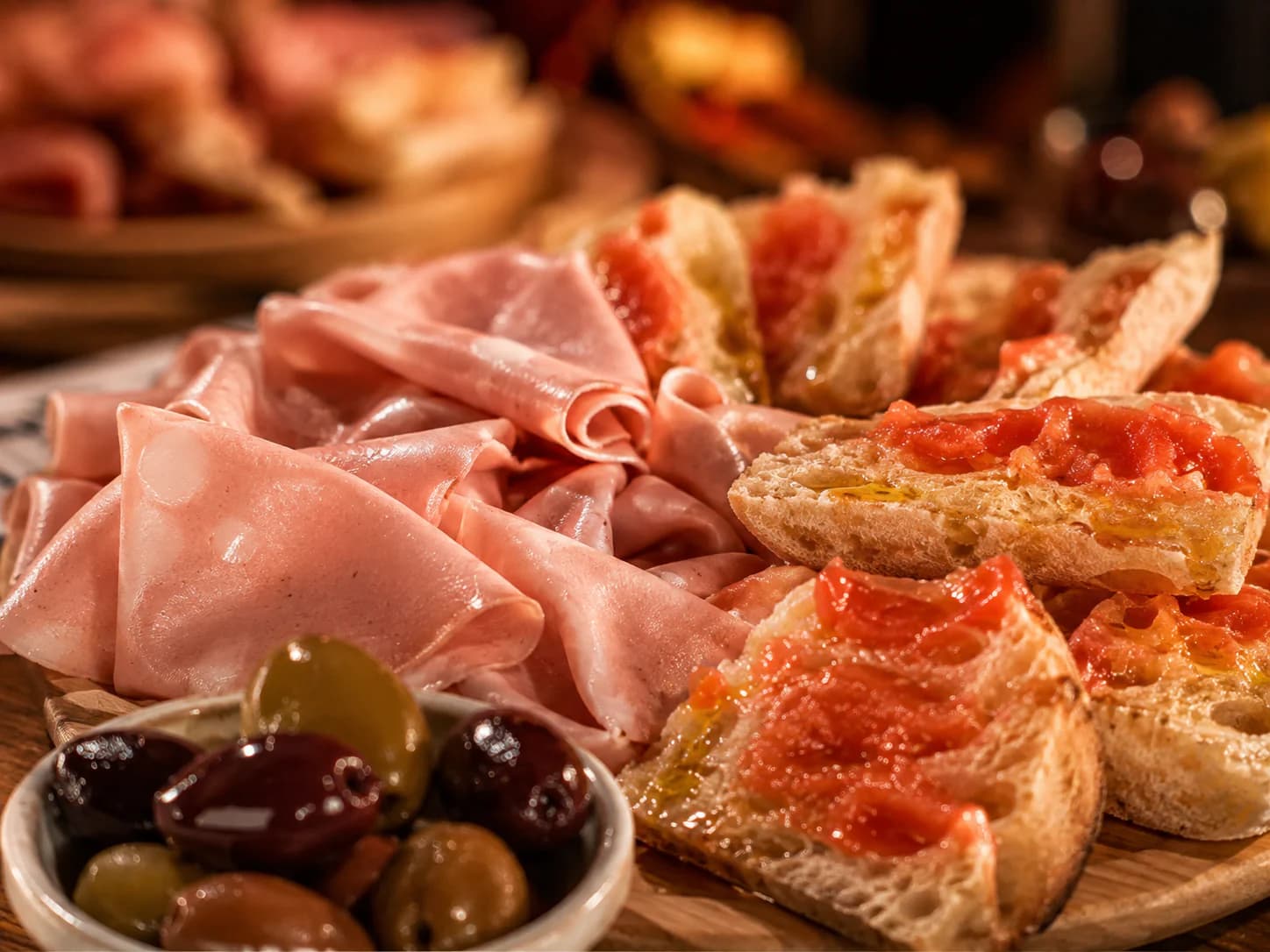
Pa amb tomàquet
Rustic bread rubbed with ripe tomato, finished with olive oil and salt. It looks simple, but the quality of the bread, tomato and oil makes all the difference. Order it as a side or with cured meats and cheese.
How to order: Say “pa amb tomàquet” or ask for pan con tomate.
Patatas bravas
Crisp potatoes with a spicy sauce, aioli, or both. Bravas are found across Spain, but Barcelona has a serious bar-by-bar bravas culture. They are ideal for sharing and a useful first test of a tapas kitchen.
How to order: One portion normally works as part of a shared order.
La bomba
A fried potato ball, traditionally filled with seasoned meat and served with spicy sauce and aioli. This is the most specifically Barcelona tapa on the list, with its roots in the seafront neighbourhood of Barceloneta.
How to order: Usually ordered by the piece, so check the menu before choosing a quantity.
Croquetas
Creamy béchamel croquettes with a crisp breadcrumb coating. Jamón is common, but you may also find mushroom, chicken, seafood or cheese versions. The best ones are delicate inside rather than dense.
How to order: Ask which flavour is homemade that day.
Jamón, fuet and local cheeses
A shared board is an easy way to taste several flavours together. Jamón is Spanish, while fuet, llonganissa and many farmhouse cheeses connect the plate more closely to Catalonia. Pair them with pa amb tomàquet.
How to order: A mixed board is better for discovery than ordering the largest plate of one item.
Seasonal seafood
Barcelona’s position on the Mediterranean makes seafood an important part of local eating. Look for grilled sardines, anchovies, mussels, squid and whatever the kitchen recommends in season rather than expecting one fixed signature plate.
How to order: Ask for the market fish or seafood special and confirm the price if it is listed by weight.
Rice dishes and paella
Paella comes from Valencia, not Barcelona, but good rice cooking is firmly part of Mediterranean dining here. Seafood rice, black rice and soupy rice dishes can be as rewarding as a familiar paella.
How to order: Good rice is often cooked to order, priced per person and may require a minimum of two.
Fideuà
Fideuà uses short noodles instead of rice and is commonly cooked with seafood and a deeply flavoured stock. It is especially worth trying if your table wants the spirit of a seafood rice dish without ordering another paella.
How to order: Like rice dishes, it may be listed per person with a two-person minimum.
Escalivada
Roasted aubergine, red pepper and onion, peeled into soft strips and dressed with olive oil. It may arrive cold or at room temperature, on its own, on toast, or with anchovies.
How to order: A good counterpoint when the rest of the table is rich, fried or meat-heavy.
Crema Catalana
A chilled custard scented with cinnamon and citrus, topped with a thin layer of burnt sugar. It is related to crème brûlée, but has its own ingredients, texture and Catalan identity.
How to order: Crack the caramel top and eat it with the custard underneath.
Vermut, cava and coffee
Vermut is made for a relaxed aperitif, cava suits a celebratory glass, and a short coffee is a natural finish. Sangria is popular with visitors and can be fun, but it is not the only local drinking ritual worth knowing.
How to order: Try vermut before lunch, cava with food, and a café solo or cortado after.
Modern Barcelona cooking
Barcelona’s food story is not frozen in tradition. Contemporary tapas, natural wine bars and cooking shaped by the city’s international communities all belong in an honest guide. Our own tour connects traditional food and drink with the stories of the Gothic Quarter and El Born.
How to order: Leave room for one place that does not fit the traditional checklist.
Order with confidence
How to eat well without overplanning
- Start with fewer plates. Portion sizes change from bar to bar, so add a second round once you see the table.
- Mix familiar and local. Bravas and croquetas are easy wins. Add a Catalan dish or the house special so the meal belongs to Barcelona.
- Check rice rules. A price may be per person, and a minimum of two people is common. Freshly cooked rice also takes time.
- Say dietary needs clearly. Ask before ordering and do not assume a dish is suitable because its name sounds meat-free or gluten-free.
- Leave room for the city. A spontaneous vermut, market snack or modern small plate can be more memorable than completing a rigid list.
A better first meal
Four common food mistakes in Barcelona
Treating tapas as one fixed cuisine
Tapas describes a way of eating and sharing. The actual dishes can be Catalan, Spanish or modern.
Calling every rice dish paella
Learn the words arròs, arròs negre and fideuà. They open up much more of the menu.
Ordering the whole meal at once
A first round gives you a chance to judge portions and follow what looks best around you.
Only eating beside major sights
Walk a few streets, check what locals are ordering and choose a place that cares about its speciality.
Want the easy version?
Taste Barcelona with a local guide and the table already planned.
Our 3.5-hour Tipsy Tapas Tour combines paella and sangria, Mexican tacos with another drink, then Crema Catalana and specialty coffee with local stories through Barcelona’s historic streets. The tour menu is its own experience, not a promise to include every dish in this guide.
- Three food and drink tastings
- Drinks and tastings included
- Local guide and old-city stories
Practical answers
Barcelona food FAQs
What food is Barcelona best known for?
Barcelona is especially associated with Catalan cooking, pa amb tomàquet, the Barceloneta bomba, seafood, rice dishes, charcuterie and Crema Catalana. The city also has a modern, international food scene that goes well beyond a fixed list of traditional dishes.
Is paella from Barcelona?
No. Paella originated in the Valencian region. It is widely served in Barcelona, and the city has excellent Mediterranean rice cooking, but it is more accurate to describe paella as Valencian rather than Catalan.
What time do people eat dinner in Barcelona?
Dinner is generally later than in the UK or United States. Many restaurant kitchens settle into dinner service from about 8 pm, with local diners often arriving later. Check the current hours of any specific venue before travelling across the city.
How many tapas should two people order?
Three or four shared plates is a sensible starting point for two people, but portion sizes vary greatly. Order a first round, see how large it is and add more if needed. Rice dishes are often substantial and may be priced per person.
Do I need to book restaurants in Barcelona?
Book ahead for a specific popular restaurant, weekend dinner, or a large group. For casual tapas, moving between bars can be part of the experience, but opening hours and busy periods still vary.